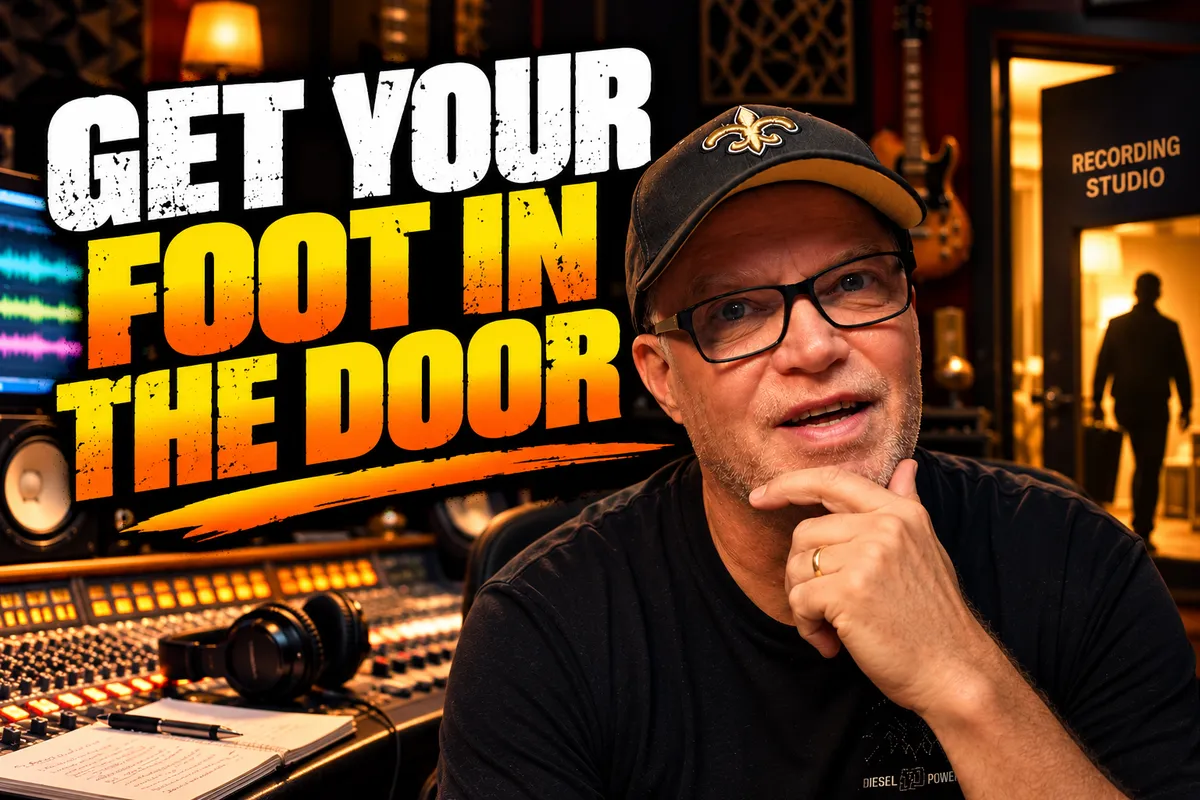
Want to Work in a Recording Studio? Start Here.
A lot of people want to work in a recording studio.
They want to record bands. Mix records. Produce artists. Sit behind a console and make music for a living.
But then comes the obvious question:
How do you get experience when nobody wants to hire you without experience?
I've spent more than 40 years working in the audio business, including roughly 20 years owning and operating a commercial recording studio.
Over the years, I've watched a lot of people try to get into this business.
Some eventually became working engineers, producers, assistants, and audio professionals.
Others never really made it past wanting to do it.
The difference wasn't always talent.
And it certainly wasn't who owned the most gear.
A lot of the time, it came down to something much simpler:
Could they get themselves into the right environment, become useful, and give people a reason to invite them back?
If I were trying to get into a recording studio today, that's where I'd start.
Your First Goal Isn't to Become the Engineer
I understand why people want to jump straight to the fun part.
You learned Pro Tools.
You've been recording at home.
You've watched a thousand mixing videos.
You're ready to sit behind the console and make records.
But a professional studio probably isn't going to hand you a client's session on your first day.
And that's okay.
Your first objective should be much simpler:
Get in the room.
Get around people who are actually doing this professionally.
Watch how sessions are prepared.
Pay attention to how the engineer communicates with clients.
Learn how equipment gets set up.
See how problems get solved when something doesn't work.
Watch what happens before the engineer ever pushes Record.
There's an enormous amount you can learn simply by being around professional sessions.
And eventually, you stop being the person watching.
You become the person helping.
Learn the Boring Stuff
Everybody wants to mix.
Not everybody wants to wrap cables.
That's exactly why learning the unglamorous parts of the job can make you valuable.
Learn basic signal flow.
Learn how microphones are handled.
Learn how to properly set up a mic stand.
Learn the common cables and connectors you'll find around a studio.
Learn how to patch things.
Learn how to label things.
Learn how sessions and files are organized.
Learn how to tear down a session and put everything back where it belongs.
None of this is particularly exciting.
But it does something important:
It makes you useful.
And when you're trying to get your foot in the door, being useful is far more valuable than trying to convince everybody how much you know.
You Don't Have to Know Everything
One of the easiest ways for a beginner to get into trouble is pretending to know something they don't.
You don't have to do that.
If someone asks:
“Do you know how to do this?”
and you genuinely don't know, there's nothing wrong with saying:
“No. But I'd like to learn.”
I'd much rather hear that than have somebody pretend they understand something and create a bigger problem.
Nobody expects a beginner to know everything.
You're there because you're learning.
Be curious. Pay attention. Ask good questions at the appropriate time.
And when somebody shows you how to do something, try not to make them show you the same thing ten more times.
That's how you start becoming dependable.
Want a Step-by-Step Guide?
I wrote So, You Want to Work in a Studio? specifically for people trying to figure out how to break into the recording studio business.
And I'm giving the complete eBook away FREE.
It goes much deeper than I can in a single article or YouTube video and gives you something you can actually work through as you start pursuing opportunities.
GET YOUR FREE COPY OF SO, YOU WANT TO WORK IN A STUDIO?
Be the Person People Want Around
This part doesn't get talked about enough.
You can know every keyboard shortcut in Pro Tools and still be somebody nobody wants in the room.
Studios are professional workplaces.
There are clients there.
There may be artists working through something difficult.
There may be deadlines.
There may be expensive equipment everywhere.
And sometimes there are stressful situations where everybody is trying to solve a problem quickly.
How you behave matters.
Show up early.
Listen.
Pay attention.
Stay off your phone.
Don't disappear when there's work to do.
Treat the clients professionally.
Treat the equipment professionally.
Treat everyone in the building professionally.
And learn when to ask questions.
There's a time when an engineer may be happy to explain exactly what they're doing.
There's also a time when they're trying to solve a problem while the client is waiting and don't need someone asking:
"Hey, what compressor is that?"
Learn the difference.
Don't Act Like the Small Jobs Are Beneath You
This can be difficult when you've spent years dreaming about becoming an engineer.
You finally get into a real studio...
And somebody asks you to take out the trash.
Or make coffee.
Or wrap cables.
Or clean something.
Or run to pick something up.
Or back up files.
And you're thinking:
"This isn't why I got into audio."
Actually, at that moment, it might be exactly why you're there.
You're learning how the operation works.
You're showing people whether they can depend on you.
You're building trust.
Nobody is promising that taking out the trash will magically turn you into a recording engineer.
But acting like certain jobs are beneath you can certainly make sure you're never given the opportunity to do anything else.
How Do You Find That First Opportunity?
Start locally.
Look for:
Recording studios
Rehearsal studios
Engineers and producers
Production companies
Schools
Churches
Venues
Other businesses doing real audio work
Then make contact.
You don't need to send somebody your entire life story.
Tell them who you are.
Tell them what you're interested in.
Briefly explain any relevant experience you already have.
And ask whether they ever need entry-level help, assistants, interns, runners, or simply an extra set of hands.
You might contact ten places and hear nothing.
You might contact twenty.
That's part of it.
You aren't looking for twenty opportunities. You need the first one.
Stop Asking Only What the Studio Can Do for You
This is a big one.
Imagine owning a studio and regularly receiving some version of:
"I want to learn recording. Can you teach me?"
What you're really asking is:
Can you give me your time?
Try looking at the relationship from the other direction.
What can you bring?
Can you help set up?
Can you organize something?
Can you edit?
Can you clean?
Can you run errands?
Can you help tear down sessions?
Is there something you can do that saves somebody else time?
Instead of asking:
“What can this studio do for me?”
start asking:
“How can I be useful to this studio?”
That's a very different mindset.
Getting Through the Door Isn't the Goal
Here's the part I'd really like you to remember.
Your first opportunity isn't the win.
Getting invited back is the win.
Think of that first day as an audition.
Did you show up on time?
Did you listen?
Did you follow instructions?
Did you make yourself useful?
Did you make someone's job easier rather than harder?
When the day was over, did someone think:
“I'd work with that person again.”
Because that's where things start to happen.
Another session comes up.
Somebody needs an extra hand.
An engineer needs an assistant.
Someone asks:
"Who was that person who helped us last time?"
Your name gets passed along.
One opportunity becomes another.
That's how a career can begin.
Not because somebody officially declares that you're now a professional.
Because people start calling you to do professional work.
Stop Waiting to Feel Ready
You should absolutely learn your craft.
You should understand the fundamentals.
You should practice.
And you shouldn't promise clients something you aren't capable of delivering.
But eventually there's a point where more learning becomes a way of hiding.
You don't have to know everything before you start getting around the business.
In fact, you can't learn everything sitting at home.
Some things only make sense after you've been in the room.
So find the studios.
Find the people doing the work.
Learn the basics.
Make contact.
Look for an opportunity.
Become useful.
And when somebody finally gives you a chance:
Make damn sure they want you back.
That's how you get your foot in the door.
Get the Free Book
If working in a recording studio is something you're serious about pursuing, I put together a much deeper resource for you.
So, You Want to Work in a Studio?
It's my beginner's guide to understanding the studio world and taking those first steps toward working in it.
And right now, the complete eBook is FREE.
Don't download it just to add another PDF to your computer.
Read it.
Use it.
And then go do something with it.
Get in. Become useful. Get invited back.
— Donny Baker
Grammy®-winning Studio Owner/engineer/producer
The Business of Audio


