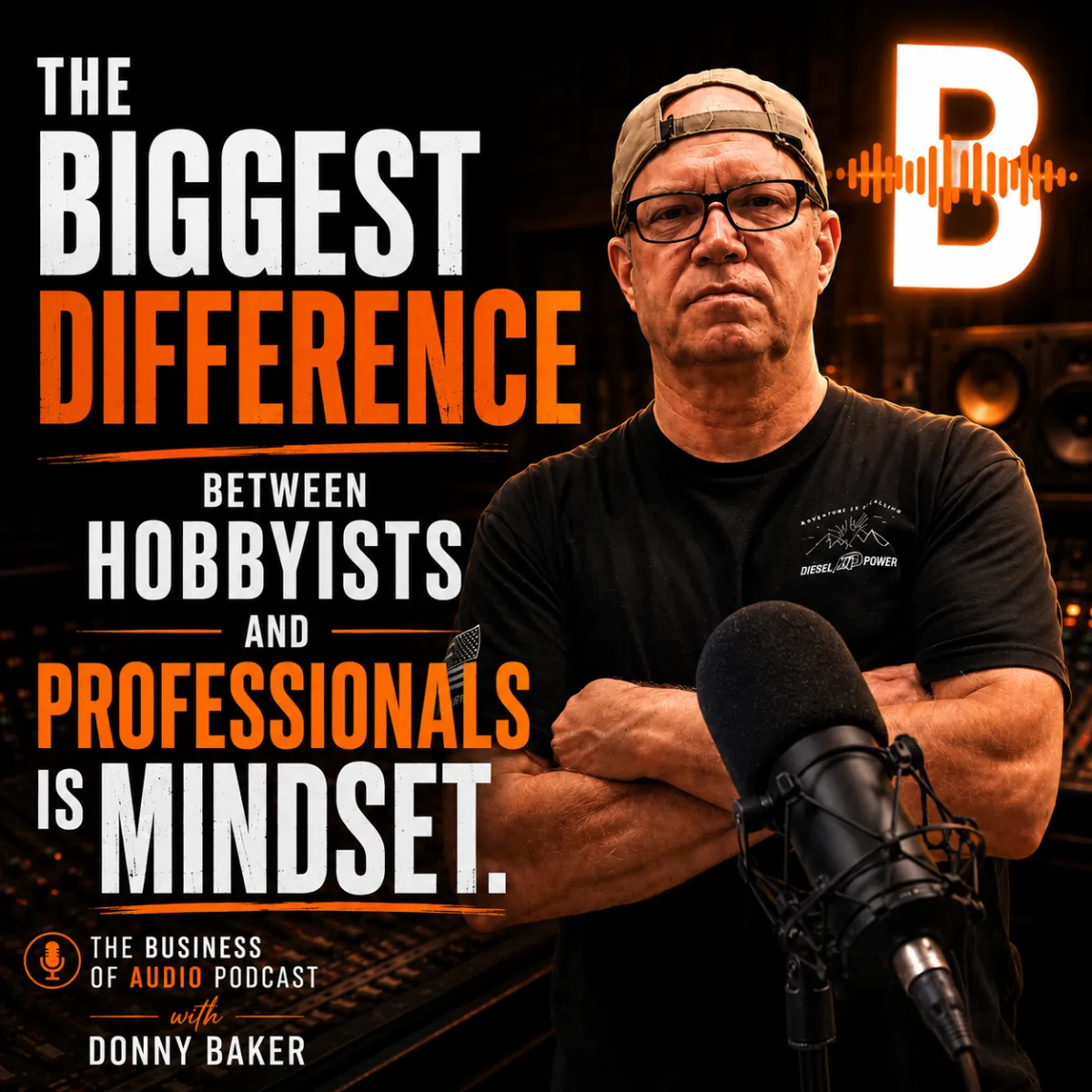
The Audio Engineer's Mindset:
The Difference Between Hobbyists and Professionals
When most people think about becoming a better audio engineer, they focus on technical skills.
They study EQ.
They learn compression.
They watch mixing tutorials.
They buy plugins.
And while those things are important, they're not what separates hobbyists from professionals.
After more than 40 years in audio, I've learned that the biggest difference isn't skill.
It's mindset.
The Hobbyist Buys Gear. The Professional Solves Problems.
Most hobbyists are always looking for the next piece of gear.
A new microphone.
A new plugin.
A better interface.
Professionals think differently.
Instead of asking:
"What gear do I need?"
They ask:
"How can I solve this problem?"
Clients don't hire microphones.
They hire people who can deliver results.
The Hobbyist Waits. The Professional Acts.
Many engineers spend years waiting.
Waiting for better gear.
Waiting for more experience.
Waiting for confidence.
Waiting until they feel "ready."
Professionals understand something important:
You rarely feel ready before you start.
Most careers are built by taking action before everything is perfect.
The Hobbyist Learns Forever. The Professional Applies.
Learning is important.
But learning without action can become a trap.
Some engineers spend years watching tutorials and taking courses without ever putting those lessons into practice.
Professionals learn and apply.
They make mistakes.
They improve.
They move forward.
Knowledge only becomes valuable when it's put to work.
The Hobbyist Seeks Validation. The Professional Seeks Results.
Social media has made this worse.
Many people focus on:
Likes
Followers
Views
Comments
Professionals focus on:
Clients
Projects
Referrals
Income
Attention feels good.
Results pay bills.
The Hobbyist Focuses on Audio. The Professional Focuses on People.
This is one of the biggest mindset shifts in the business.
Most clients cannot tell you which compressor you used.
They remember:
How you communicated
Whether you were reliable
If you delivered on time
Whether the experience was enjoyable
Audio is a people business.
The engineers who understand that usually stay busy.
The Hobbyist Chases Perfection. The Professional Delivers.
Perfection is often just fear wearing a disguise.
Professionals understand that finished work is more valuable than perfect work.
They meet deadlines.
They make decisions.
They move projects forward.
They know when to stop tweaking.
The Hobbyist Thinks Project to Project. The Professional Thinks Career to Career.
A hobbyist asks:
"How can I make this mix better?"
A professional asks:
"How can I build a career that lasts?"
That shift changes everything.
It affects:
Client relationships
Business decisions
Pricing
Marketing
Time management
Professionals play the long game.
The Most Important Mindset Shift
Many engineers spend years asking:
"How do I become a better engineer?"
That's a good question.
But there's a better one.
Ask:
"How do I become more valuable?"
Because value goes beyond technical skill.
Value comes from:
Reliability
Communication
Problem-solving
Professionalism
Consistency
Those qualities create trust.
And trust creates opportunity.
Final Thoughts
Technical skills matter.
You should absolutely continue learning your craft.
But don't make the mistake of believing that skill alone creates success.
The engineers who build lasting careers think differently.
They focus on people.
They take action.
They solve problems.
They build systems.
And they understand that success in audio is about much more than audio.
It's about mindset.
If you're ready to build both your audio skills and your business mindset, Join the community fro free 👉 https://www.skool.com/sound-foundations-8658/about
Learn to make your living making music happen.
